

Understanding and Preventing Domestic Abuse
Domestic abuse is a pervasive issue that affects millions of people around the world, often occurring behind closed doors. It transcends gender, age, socioeconomic status, and ethnicity, leaving emotional, physical, and psychological scars. However, prevention is possible, and it begins with awareness, education, and community support. Here’s how we can all play a role in domestic abuse prevention.
- Recognize the Signs
Domestic abuse isn’t limited to physical violence—it includes emotional, financial, sexual, and psychological abuse. Recognizing the warning signs is crucial in early prevention. These can include controlling behavior, isolation from friends or family, constant put-downs, and threats of violence. Often, victims may feel trapped, ashamed, or afraid to ask for help.
If you notice someone experiencing these symptoms, reach out gently. Offer support without judgment and encourage them to seek professional help.

- Promote Healthy Relationships
Healthy relationships are built on mutual respect, trust, and open communication. Teaching young people about boundaries, consent, and equality in relationships is key to preventing domestic abuse before it starts. Schools, families, and community organizations can collaborate to provide education on these values, ensuring the next generation understands how to maintain positive, non-violent relationships.

- Empower Victims to Seek Help
One of the biggest barriers to preventing domestic abuse is the silence surrounding it. Many victims feel powerless, fearing retaliation or the stigma associated with coming forward. Empowering victims through accessible resources—like hotlines, shelters, and counseling services—can be lifesaving. Ensuring they know there is a safe place to turn and people who will believe and support them is crucial.
Support organizations such as the National Domestic Violence Hotline and local shelters are vital in offering assistance. Share information about these resources in your community to raise awareness and create a network of support for those in need.

- Encourage Bystander Intervention
Bystanders play a pivotal role in preventing domestic abuse. If you witness or suspect abuse, acting can make a significant difference. This doesn’t always mean direct confrontation, but it could involve contacting authorities, offering a safe space for the victim, or connecting them with support services. It’s important to act safely and appropriately, considering the immediate situation.
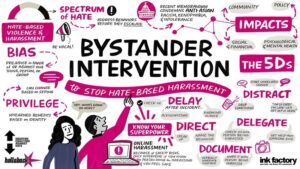
Visual notes created for Houston Coalition Against Hate on May 3rd, 2021
- Challenge Cultural Norms and Support Policy Changes
Cultural attitudes and societal norms can perpetuate domestic abuse, particularly in environments that condone control or aggression. Challenging these norms through open dialogue and education is essential in shifting the societal mindset. Additionally, advocating for stronger legal protections and resources for abuse survivors ensures that our laws evolve to better support victims and hold abusers accountable.

Final Thoughts
Preventing domestic abuse requires a collective effort from individuals, communities, and governments. By educating ourselves on the signs, promoting healthy relationships, empowering victims, and supporting policy change, we can help create a society where abuse is not tolerated, and all individuals feel safe in their homes and relationships. Together, we can break the cycle of abuse and foster a culture of respect and empathy.
If you or someone you know is experiencing domestic abuse, don’t hesitate to reach out for help. Support is available.