
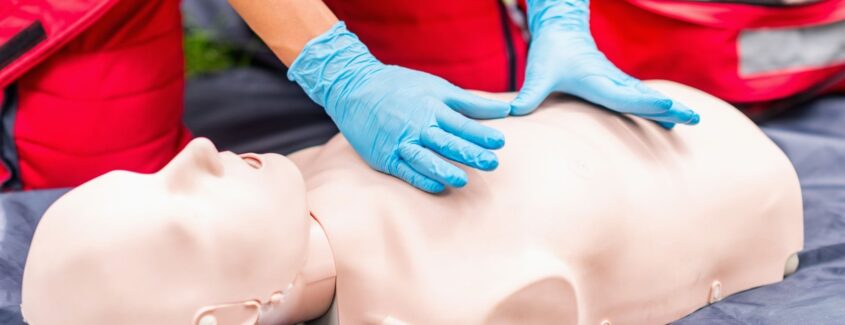
The Importance of Hands-On CPR Training vs. Learning Online
Cardiopulmonary Resuscitation (CPR) is a life-saving technique that can make the difference between life and death in emergencies such as cardiac arrest. The effectiveness of CPR training, whether hands-on or online, is crucial in ensuring individuals can perform this skill competently when it matters most. Here’s an exploration of why hands-on CPR training often trumps learning online:
Immediate Feedback
Hands-On Training:
-
Real-Time Corrections: During hands-on sessions, instructors can immediately correct mistakes in compression depth, rate, or technique. This direct feedback loop is invaluable for learning proper CPR techniques.
-
Mannequin Practice: Trainees work with mannequins to simulate real human physiology, giving a realistic feel of what it’s like to perform CPR on an actual person.
Online Learning:
-
Delayed Feedback: Online platforms might offer quizzes or video assessments, but the feedback isn’t immediate or tailored to individual performance. Without real-time correction, trainees might continue with incorrect techniques.
Sensory Experience
-
Tactile Feedback: The physical sensation of performing compressions on a mannequin helps learners understand the force required, which is critical for effective CPR.
-
Auditory and Visual Cues: The sound of compressions and observing chest rise during rescue breaths provide sensory cues that help in mastering the rhythm and depth of CPR.
Online Learning:
-
Lacks Physical Interaction: While videos can show demonstrations, there’s no actual feel of performing the compressions or ventilations, which can be a significant disadvantage in learning muscle memory and technique.
Retention and Confidence

-
Building Confidence: Physical practice instills confidence in the learner, preparing them mentally and emotionally for real-life scenarios. This confidence can be crucial during high-stress situations.
-
Better Retention: Studies have shown that physical practice leads to better long-term retention of skills compared to passive learning through videos or texts.
Online Learning:
-
Convenience vs. Competence: Online courses offer convenience but might not build the same level of confidence or skill retention. Without practicing, learners might forget crucial steps or techniques over time.
Interpersonal Dynamics
-
Teamwork Skills: CPR often requires teamwork, especially in scenarios like using an Automated External Defibrillator (AED). Hands-on sessions can simulate these interactions, teaching effective communication and coordination.
-
Instructor Interaction: Direct interaction with certified trainers allows for questions, clarifications, and personalized guidance.
Online Learning:
-
Isolation: Learning alone can miss out on understanding group dynamics which are essential in real emergency situations. Interaction is limited to forums or chat support, which isn’t the same as real-time teamwork.
Certification and Credibility

-
Certification Validity: Many organizations require hands-on training for certification, valuing the practical assessment of skills. This certification holds more weight in professional settings or for legal purposes.
Online Learning:
-
Variable Acceptance: While some online courses provide certification, the credibility might vary. Employers or institutions might not recognize these certificates as effectively as those from in-person training.
Conclusion
While online CPR courses offer accessibility and convenience, the tactile, feedback-rich environment of hands-on training provides a superior learning experience. Hands-on training not only prepares individuals for the physical demands of CPR but also ensures they can retain and apply this knowledge effectively in real-life emergencies. For those serious about mastering CPR to save lives, combining both online learning for theory with hands-on practice for skill development could be the ideal approach. However, if one must choose, hands-on training stands out for its comprehensive, practical learning benefits.