
Stroke Recognition and Treatment: Know the Signs, Act Fast, Save Lives
A stroke isn’t just a medical term—it’s a ticking clock. Every minute that passes during a stroke, nearly 2 million brain cells die, potentially stealing speech, movement, or memory from someone you love—or even you. In 2025, strokes remain a leading cause of death and disability worldwide, striking over 15 million people annually. Yet, here’s the kicker: many strokes are preventable, and even more are treatable if caught early. The key? Recognizing the signs and knowing what to do next. Let’s break down how to spot a stroke, why speed is everything, and how treatment can turn the tide.
What Is a Stroke, Anyway?
A stroke happens when blood flow to the brain gets interrupted, starving cells of oxygen and nutrients. There are two main types: ischemic (about 87% of cases), where a clot blocks a blood vessel, and hemorrhagic, where a vessel bursts, causing bleeding in or around the brain. A third term, transient ischemic attack (TIA or “mini-stroke”), is a temporary blockage that resolves quickly but warns of bigger trouble ahead.
Think of your brain as a city: ischemic strokes are like traffic jams clogging the highways, while hemorrhagic strokes are burst pipes flooding the streets. Either way, the damage depends on how long the chaos lasts and which neighborhood—speech, motor skills, vision—gets hit. That’s why recognizing a stroke fast isn’t just smart—it’s life-saving.
Spotting a Stroke: The BE FAST Method
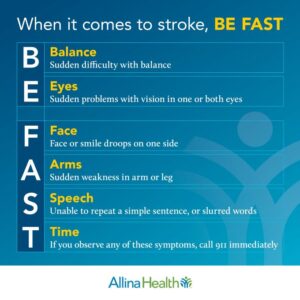
Time is brain, so the faster you identify a stroke, the better the outcome. The BE FAST acronym is your go-to tool—easy to remember, hard to ignore:
-
B – Balance: Sudden dizziness, trouble walking, or loss of coordination. Are they stumbling or leaning like the room’s spinning?
-
E – Eyes: Vision blurs, doubles, or cuts out in one or both eyes. Can they see you clearly?
-
F – Face: One side droops or feels numb. Ask them to smile—does it look lopsided?
-
A – Arms: Weakness or numbness, especially on one side. Have them raise both arms—does one drift down?
-
S – Speech: Slurring, garbled words, or trouble understanding. Ask them to repeat “The sky is blue”—can they?
-
T – Time: If any of these hit, call emergency services now. Note the exact time symptoms started—it’s critical for treatment.
Other red flags? A sudden, explosive headache (think “worst ever”), confusion, or vomiting, especially with hemorrhagic strokes. Don’t second-guess—strokes can look subtle or dramatic, but they don’t wait for you to decide.
Why Speed Matters
Here’s the stat that’ll stick with you: for every minute a stroke goes untreated, you lose those 2 million neurons. In an hour, that’s 120 million—equivalent to aging your brain 3.6 years. The “golden hour” isn’t just a catchy phrase; it’s the window where treatments work best. After 4.5 hours, options shrink fast.
Take ischemic strokes. Clot-busting drugs like tPA (tissue plasminogen activator) can dissolve blockages, but they’re only safe within 4.5 hours of symptom onset—and even then, only if bleeding’s ruled out. Beyond that, permanent damage sets in, stealing independence or life itself. Hemorrhagic strokes? Surgery might stop the bleed, but delays mean more pressure on the brain, more destruction.
Speed isn’t just about treatment—it’s about survival. The American Stroke Association says immediate action cuts disability risk by 30%. So, if you see BE FAST signs, don’t drive them to the ER—call 911. Paramedics can start care en route and alert hospitals to prep, shaving precious minutes.
Treatment: From Emergency to Recovery
Once a stroke’s suspected, here’s what happens:
-
Emergency Response
-
Diagnosis: At the hospital, a CT scan or MRI pinpoints the stroke type—clot or bleed. Time of onset (from your BE FAST note) guides the plan.
-
For Ischemic Strokes:
-
tPA: Given via IV within 4.5 hours, it breaks up clots. It’s not a silver bullet—10% risk of bleeding—but it boosts recovery odds.
-
Thrombectomy: Up to 24 hours post-stroke, doctors thread a catheter through an artery to yank out big clots. It’s a game-changer for severe cases, restoring blood flow fast.
-
-
For Hemorrhagic Strokes:
-
Surgery: Clipping an aneurysm or draining blood relieves pressure. Meds lower blood pressure to stop further bleeding.
-
Monitoring: ICU care tracks swelling or seizures, which can worsen damage.
-
-
-
Acute Care
Post-emergency, the focus shifts to stabilizing. Blood thinners (for clots) or reversal agents (for bleeds) might come into play. Doctors hunt for causes—high blood pressure, atrial fibrillation, smoking—to prevent round two. Stroke units, specialized hospital wings, cut death rates by 20% with tailored care. -
Rehabilitation
Recovery’s a marathon, not a sprint. Physical therapy rebuilds strength—think relearning to walk or grip a spoon. Speech therapy tackles slurring or swallowing issues. Occupational therapy adapts daily tasks. Up to 80% of survivors face some disability, but early rehab can reclaim function. Motivation matters—patients who push regain more.
Prevention: Don’t Let It Happen Again
Strokes aren’t always random—80% are preventable. High blood pressure’s the top culprit, so check it yearly (aim for under 120/80). Quit smoking—it doubles stroke risk. Move 30 minutes most days; obesity and diabetes are silent accelerators. Diet? Cut salt, boost veggies—think Mediterranean vibes. If you’ve had a TIA, meds like aspirin or statins might be your shield. Know your family history—genes can load the dice.
Why Awareness Saves Lives
Strokes kill 6 million people yearly, yet public knowledge lags. A 2023 survey found only 40% of Americans could name three stroke signs. That’s why campaigns like BE FAST exist—to turn bystanders into first responders. Schools, workplaces, even apps can spread this gospel. Imagine a world where everyone knows the signs—fewer widows, fewer wheelchairs.
Take Sarah, a 52-year-old teacher I heard about. She felt her arm go numb mid-lesson, words jumbling. A student’s quick 911 call got her tPA within an hour—she’s back teaching today. Contrast that with John, 65, who ignored his drooping face, thinking it’d pass. By morning, he’d lost speech permanently. Awareness made the difference.
Final Thoughts: Act Now, Not Later
Stroke recognition and treatment boil down to one word: urgency. BE FAST isn’t just a checklist—it’s a lifeline. Spot the signs, call 911, and let pros handle the rest. Treatment’s evolved—clot-busters, catheters, rehab—but it’s useless without speed. Prevention’s your armor, but awareness is your sword.
So, memorize BE FAST. Share it with your crew. Take a CPR class—strokes often pair with cardiac arrest. You’re not just reading this—you’re arming yourself to save a life. Because when a stroke strikes, every second counts, and you might be the one to beat the clock.