
How to Respond When Someone Collapses in Public

Imagine you’re out in public — maybe at a store, in the park, or walking down the street — and someone suddenly collapses. The instinctive reaction for many of us is shock or hesitation: “What do I do? Will I make it worse?” But your quick, confident action in those first moments can dramatically impact the person’s survival outcome.
1. Stay calm and ensure the scene is safe
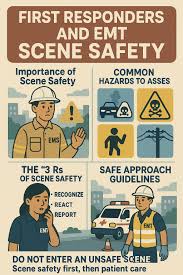
First, take a quick look around to make sure you and the person are out of danger (traffic, falling items, aggressive crowd, etc.). You don’t want to become a second victim. Once the area is safe, approach the person and check for responsiveness: ask, “Are you okay?” and lightly tap their shoulder. Medical News Today+1
2. Call for help — loud and clear
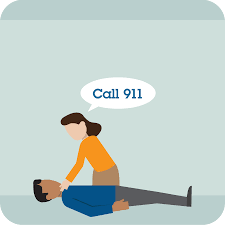
If the person is unresponsive or collapsed, shout for help and instruct someone specific to call 911 (or your local emergency number) and — if available — to bring an AED (automated external defibrillator). Early activation of emergency services is one of the key links in the “chain of survival.” heart.org+2health.ucdavis.edu+2
3. Check breathing and pulse
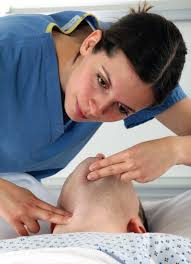
Once you’ve called for help, quickly check if the person is breathing normally and has a pulse. If they are not breathing normally (or only gasping) or you can’t detect a pulse, treat this as a potential cardiac arrest until proven otherwise. @Medanta+2cpr.heart.org+2
4. Begin chest compressions (hands-only if needed)
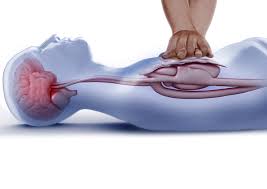
If the person isn’t breathing normally or you suspect their heart has stopped, start chest compressions right away: place the heel of one hand (and your other hand on top) in the centre of the chest and push hard and fast at a rate of about 100-120 compressions per minute (about the beat of “Stayin’ Alive”). Press down at least 2 inches for adults, allowing the chest to fully recoil between compressions. An AED should be applied as soon as it’s available. heart.org+2health.ucdavis.edu+2
5. If they’re breathing but unconscious — recovery position
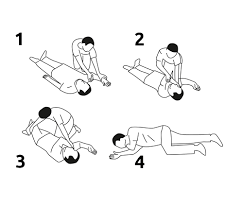
If the person has regained some breathing but is still unresponsive (or semi-responsive) and you do not suspect a spinal injury, place them in the recovery position: roll them onto their side, make sure the airway is open, and monitor them until help arrives. Avoid giving food or drink. nhs.uk+1
6. When it may just be fainting — but still serious
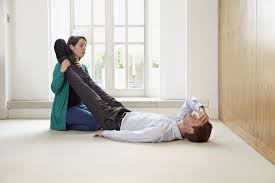
Sometimes someone collapses because they fainted (syncope). In those cases, if they recover quickly and are breathing, you can help by laying them flat, elevating their legs about 12 inches, loosening tight clothing, and waiting with them until they’re stable. But be cautious: if they don’t recover quickly, or if there are signs of chest pain, irregular heartbeat, confusion or injury — treat as a possible cardiac emergency. mayoclinic.org+2healthdirect.gov.au+2
7. Don’t leave them alone

Whatever the scenario, do not leave the person alone after they collapse. Keep monitoring breathing and responsiveness, keep the airway open, and wait for professional help to arrive. If they vomit, turn them on their side if you’ve placed them in the recovery position. Mount Sinai Health System
8. Why your action matters

Research shows that for out-of-hospital cardiac arrest, every minute without CPR or a shock from an AED drops the survival chances by roughly 7-10%. health.ucdavis.edu+1 Your ability to act quickly — recognizing collapse, initiating CPR, and using an AED — can mean the difference between life and death.
Bonus: Shareable takeaway
-
If someone collapses: Call. Push. Shock.
-
Be the one who starts the chain of survival.
Educating yourself and others is one of the strongest weapons in the fight against sudden cardiac arrest.