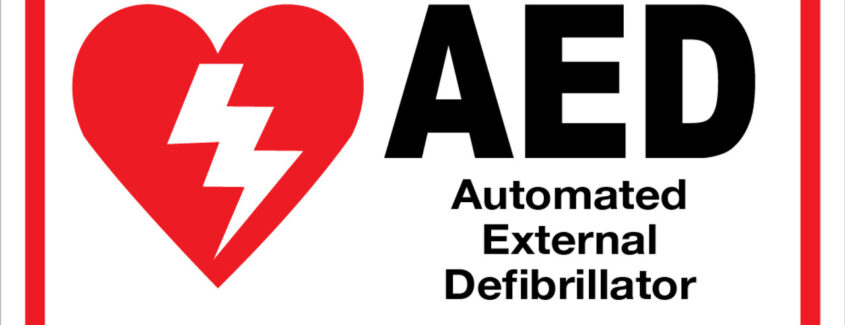
What is an AED?
An Automated External Defibrillator (AED) is a portable electronic device designed to treat individuals experiencing sudden cardiac arrest (SCA), a condition where the heart suddenly stops beating effectively. When this happens, the heart’s electrical activity becomes chaotic (a condition known as ventricular fibrillation) or the heart stops completely (asystole), leading to an immediate cessation of blood flow to vital organs. Without rapid intervention, SCA can result in death within minutes.
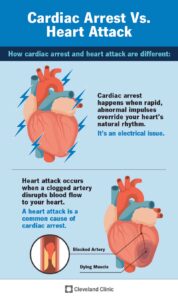
The AED is designed to detect these life-threatening heart rhythms and, if necessary, deliver a controlled electric shock to the heart. This shock can potentially reset the heart’s rhythm to normal, allowing it to pump blood effectively once again. AEDs are a crucial tool in emergency situations because they can be used by non-medical personnel, offering potentially life-saving assistance in the minutes before emergency medical services (EMS) arrive.
How Does an AED Work?
The AED is designed to be user-friendly, with step-by-step voice prompts or visual instructions guiding the user through the entire process. When an individual collapses due to suspected cardiac arrest, the AED can quickly analyze the heart’s electrical activity to determine if defibrillation (a shock) is necessary.
Here’s a basic breakdown of how an AED functions:
- Electrode Pads: The device comes with adhesive pads that the user places on the chest of the individual in cardiac arrest. These pads detect the heart’s electrical signals.
- Analysis: Once the pads are attached, the AED analyzes the heart rhythm. The device will only recommend a shock if it detects a rhythm that can be treated by defibrillation, such as ventricular fibrillation (VF) or pulseless ventricular tachycardia (VT).
- Shock Delivery: If the AED determines that a shock is necessary, it will prompt the user to deliver the shock. Some devices are fully automated and deliver the shock automatically, while others require the user to press a button. The shock is intended to stop the chaotic electrical activity in the heart, giving it a chance to reset to a normal rhythm.
- CPR Guidance: Many AEDs also provide instructions for performing CPR (cardiopulmonary resuscitation). They can detect whether compressions are being administered and may offer feedback on the quality of CPR, including the depth and rate of chest compressions.
- Reassessment: After delivering a shock, or if no shock is advised, the AED will reassess the heart’s rhythm to determine if further shocks are necessary. The device will continue to prompt the user to either deliver additional shocks or resume CPR as needed until emergency responders arrive.
Importance of Early Defibrillation
In the case of sudden cardiac arrest, time is critical. For every minute that passes without defibrillation, the chances of survival decrease by about 7-10%. After 10 minutes without intervention, survival is unlikely. This is why AEDs are so vital—they enable immediate, on-site defibrillation before professional medical help arrives.
When used in conjunction with CPR, AEDs significantly improve survival rates. CPR alone circulates a small amount of blood to vital organs but does not correct the underlying heart rhythm problem. Defibrillation, however, can restore the heart’s normal rhythm and, when applied quickly, may lead to a full recovery.
Where Are AEDs Found?
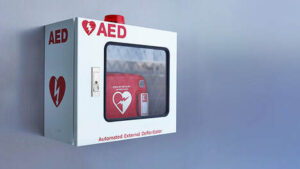
AEDs are often found in public spaces where large groups of people gather or where the risk of cardiac arrest is higher. You can even add an APP to your phone PulsePoint which will show you the closet AED to your location. Common locations include:
- Airports
- Shopping malls
- Sports stadiums and gyms
- Schools and universities
- Government buildings
- Office complexes
- Hotels and resorts
- Cruise ships
- Community centers
In many countries, public access to AEDs is encouraged or mandated by law. Increasingly, businesses and organizations are making AEDs part of their emergency preparedness plans. AEDs are also becoming more common in private homes, especially in households with individuals at higher risk of heart disease.
Who Can Use an AED?

One of the key advantages of an AED is that it can be used by anyone, even those without medical training. AEDs are designed to be simple and intuitive, with most models featuring clear voice prompts or screen instructions that guide the user through the steps of defibrillation and CPR. This ease of use makes AEDs accessible to the general public.
However, formal training on how to use an AED is highly recommended, as it can improve the speed and confidence with which a person responds to a cardiac emergency. Organizations like the American Heart Association (AHA) and the Red Cross offer CPR and AED training programs that teach participants how to identify cardiac arrest, perform CPR, and use an AED effectively.
Step-by-Step Guide on How to Use an AED
In the event of a cardiac arrest, follow these steps to use an AED:
- Assess the Situation: Make sure the environment is safe. Check if the person is unresponsive and not breathing normally. If the individual is unconscious, not breathing, or breathing irregularly (gasping), immediately call for emergency services (911 in the U.S.).
- Begin CPR: Start performing chest compressions right away. Push hard and fast in the center of the chest, at a rate of about 100-120 compressions per minute, until the AED is ready to use. If another person is available, ask them to retrieve the AED while you continue performing CPR.
- Turn on the AED: Once the AED is available, turn it on by pressing the power button or opening the lid, depending on the model. The device will automatically begin providing instructions.
- Attach the Pads: Expose the person’s chest and apply the AED pads according to the diagram on the pads or the device. One pad should go on the upper right side of the chest, just below the collarbone, and the other should be placed on the lower left side, just below the nipple. Some AED models may have a different pad configuration, so follow the device’s prompts.
- Follow the Prompts: The AED will analyze the heart’s rhythm. During this time, make sure no one is touching the individual. If a shock is necessary, the AED will either automatically deliver the shock or prompt you to press the “shock” button. Stand clear of the individual while the shock is delivered.
- Continue CPR: After the shock, or if no shock is advised, resume CPR immediately. Follow the AED’s prompts for continuing compressions and breathing. Many AEDs will guide you with audio or visual cues, such as beeping to indicate the correct compression rate.
- Repeat if Necessary: The AED will periodically reassess the heart’s rhythm and may recommend additional shocks. Continue following the prompts and performing CPR until emergency personnel arrive.

Safety Considerations
- Clear Area: Make sure no one is in contact with the individual when the shock is delivered. The AED will usually issue a warning, such as “Stand clear” before the shock.
- Avoid Wet Conditions: If the person is in a wet environment, try to move them to a dry area if possible, or at least dry their chest before applying the AED pads.
- Pacemakers and Metal Objects: If the individual has a pacemaker, place the AED pads at least one inch away from the device. Remove any metal objects (e.g., necklaces) from the chest area to avoid interference with the shock.
Conclusion
AEDs are life-saving devices designed to be used by anyone, anywhere, during a cardiac arrest. By providing clear instructions and analyzing the heart’s rhythm automatically, AEDs bridge the gap between the onset of cardiac arrest and the arrival of emergency medical services. When combined with CPR, an AED significantly improves the chances of survival, making it a critical tool in the fight against sudden cardiac arrest.