
Fall break is over, and for some parents that means, time to start making lunch again. If your kids are anything like mine PB&J is the greatest thing ever! Or maybe a ham sandwich, bologna on and on. Before you reached for those slices of bread, did you wash your hands? Yeah, yeah, yeah, we hear that all the time, wash your hands use hand sanitizers, what’s the big deal?
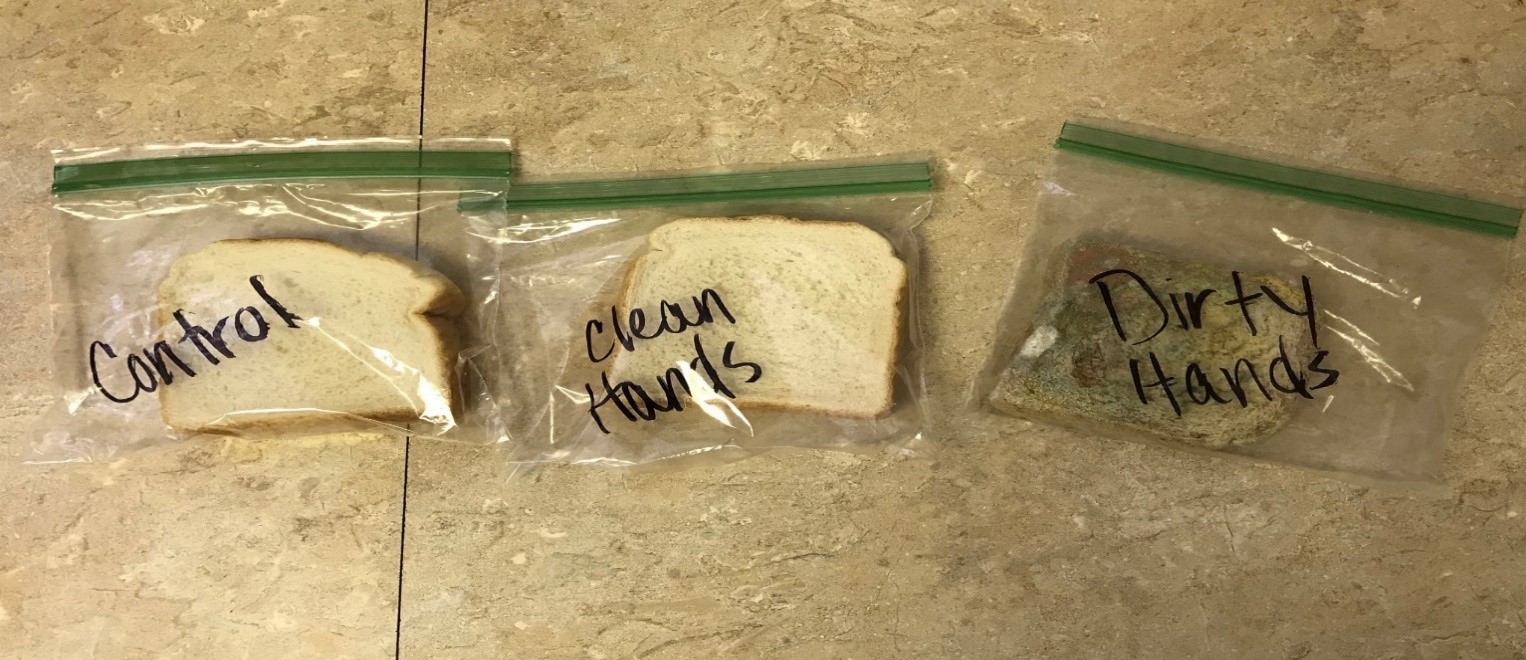
I was taken aback recently by a little science experiment carried out by one of my kid’s teachers. The experiment was quite simple, the teacher had 3 new sandwich baggies and 3 slices of bread from unopened source. 1 slice was dropped directly into baggie from the bread bag without being touched this is the control. A second slice was touched by only 4 kids in the classroom after holding onto the banister and using the door knobs; then placed into the baggie. The third slice was touched only after washing of hands with correct technique and drying with separate paper towels was completed. The three baggies were then left in the climate controlled class room not opened or retouched and observed for 1 month. The end result is pictured here below, absolutely astounding! Are you starting to rethink your opinion of that annoying hand washing? Think your kids should pay a little more attention to hand washing?
What are we coming in contact with every day? According to research by Dr. Noah Fierer and a study at the University of Colorado at Boulder. On average we carry 3,200 bacteria from 150 different species on our hands. These wonderful bacteria and viruses according to the CDC website include, but not limited too Salmonella, E. coli O157, and norovirus that cause diarrhea, and it can spread some respiratory infections like adenovirus and hand-foot-mouth disease. So are you ready to wash up now?!
We need to improve our hand washing techniques and definitely teach our children how to wash their hands. Remember in the above experiment nothing extreme was involved, just everyday objects were touched! Here is the CDC recommendation for hand washing and the use of hand sanitizer, have you been doing it right, have you taught your children the right way?
Follow Five Steps to Wash Your Hands the Right Way
Washing your hands is easy, and it’s one of the most effective ways to prevent the spread of germs. Clean hands can stop germs from spreading from one person to another and throughout an entire community—from your home and workplace to childcare facilities and hospitals.
Follow these five steps every time.
- Wet your hands with clean, running water (warm or cold), turn off the tap, and apply soap.
- Lather your hands by rubbing them together with the soap. Lather the backs of your hands, between your fingers, and under your nails.
- Scrub your hands for at least 20 seconds. Need a timer? Hum the “Happy Birthday” song from beginning to end twice.
- Rinse your hands well under clean, running water.
- Dry your hands using a clean towel or air dry them.
Use Hand Sanitizer When You Can’t Use Soap and Water
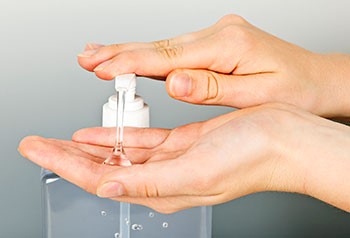
You can use an alcohol-based hand sanitizer that contains at least 60% alcohol if soap and water are not available.
Washing hands with soap and water is the best way to get rid of germs in most situations. If soap and water are not readily available, you can use an alcohol-based hand sanitizer that contains at least 60% alcohol. You can tell if the sanitizer contains at least 60% alcohol by looking at the product label.
Sanitizers can quickly reduce the number of germs on hands in many situations. However,
- Sanitizers do not get rid of all types of germs.
- Hand sanitizers may not be as effective when hands are visibly dirty or greasy.
- Hand sanitizers might not remove harmful chemicals from hands like pesticides and heavy metals.
Caution! Swallowing alcohol-based hand sanitizers can cause alcohol poisoning if more than a couple of mouthfuls are swallowed. Keep it out of reach of young children and supervise their use.
How to use hand sanitizer
- Apply the gel product to the palm of one hand (read the label to learn the correct amount).
- Rub your hands together.
- Rub the gel over all the surfaces of your hands and fingers until your hands are dry. This should take around 20 seconds
Every year major hospitals and other health care employers spend millions of dollars on hand washing education. Its no surprise why, as previously stated it is the one of the most effective way to prevent the spread of germs and viruses. It takes 20-30 seconds to wash your hands correctly, think of how much sickness can be prevented just by this simple task!
http://fiererlab.org/wp-content/uploads/2014/09/Edmonds-Wilson_2015_handmicrobiome.pdf
https://www.cdc.gov/handwashing/why-handwashing.html
https://www.cdc.gov/handwashing/when-how-handwashing.html